The narrative I knew of myself for so long was that I was difficult. I was a sensitive child who couldn’t be pacified, didn’t smile but cried easily and didn’t handle change well. It was the 1990s and I was a girl; who knew it was obvious that I was autistic? I was a horse girl who rewatched Black Beauty too many times to count, collected horse figurines and created endless drawings. Thankfully I found art early in life, and setting me up with some paper and crayons could hold my attention for hours. Turns out I could communicate better visually and it didn’t hurt that it seemed to come easily to me when few things did. Then as a teen, fantasy was my solace. I wanted nothing more than to be swept off my feet into another realm where my quirks, stims and eccentricities would make sense. Apparently imagining myself in an existence other than my own was the mask I needed then. I was in such sensory, anxious masked hell for so much of my childhood and adolescence that it barely makes sense to me now. I even remember answering a therapist early in my cancer process in 2015 that “No, I don’t really have anxiety.” Oh, hello alexithymia!
***
When I was diagnosed with a brain tumor at twenty-four I felt like life had made a cuckold of me. Nothing like cancer to make you feel like the disposable best friend in your own life. [Image 1] I retreated briefly into the nostalgia of Labyrinth after my diagnosis, but found that I couldn’t stay with Sara in her room with her toys. [Image 2] My pain was too great; fantasy had betrayed me and I had to leave Jareth behind and follow David Bowie into reality. Anything other than reality, much less my personal reality, felt impossible to entertain during the stress of cancer. I don’t say that cancer took much from me, but it did take my love of fantasy so much that I dislike it to this day.
My biggest cancer confession? Probably that for the most part between 2014 and 2016 I felt invigorated. I was inspired to view art, to make art, to write, to meet people, to just experience life. [Image 3] I remember feeling so energized during cancer, like this dialogue from Thelma & Louise: “I feel awake. I feel really awake. I don’t recall ever feeling this awake. […] Everything looks different now.” [Image 4] I felt entitled to take up space without apology or shame; I’d never existed so authentically. It felt vibrant to be alive and I remember the horrible prickling unease I sensed when that started ebbing away in late 2016. It was excruciating and I didn’t understand what was happening at the time. Going through cancer had allowed my autism to unmask, but as I moved further away from the experience I could feel the casualness of people creeping back into conversations and therefore my mask reemerging.
Then came the first Trump presidency and the Covid-19 pandemic and not only did my mask reappear in force, but I also entered what I now know as autistic burnout (which if I’m continuing with my ‘confessions,’ I have yet to fully recover from.) Following my cancer treatment and empathizing with the AIDS crisis I realized my greatest fear was getting sick with a novel illness. Having gone through cancer was difficult enough with all the research and sympathy in the world at its disposal to save lives, but contracting something not even doctors or scientists know what to do about invokes sheer terror in me. It also reeks of embarrassing #fomo and a constant state of anxiety of will they find a solution before I run out of time? Living in your worst nightmare 24/7 while encountering little compassion will leave you with immense disenfranchised grief at the least. It wore me down and out in a way I’ve never known, but the Chernobyl miniseries quote “you are dealing with something that has never occurred on this planet before” is the closest approximation to how my nervous system felt. [Image 5] It forced me to try to understand why I was struggling so much, but had seemed to flourish during cancer. After happening upon recent articles about late diagnosed autistic women and recognizing myself in their stories and experiences, I went into extensive self-education about autism for approximately three years before I had the confidence to claim that label and diagnosis in late 2021.
***
Going through my own diagnosis within the broader concept of cancer, I believe my autism allowed me to approach it objectively even as I went through it subjectively. I’m reminded of autistic advocate and livestock scientist Temple Grandin’s words: “[…] my mind constantly revises general concepts as I add new information to my memory library […] though I have observed that some people often do not readily accept new information.” [Image 6] From my own diagnosis and watching systems of care fail patients, I am of the opinion that you cannot go through cancer and return to your life the way it was; and witnessing that be the supreme allistic goal feels stubbornly resistant to any possibility of post-traumatic growth. The quote that “to be modern is to know what is no longer possible” by Roland Barthes has been a tenet I’ve followed since I learned it in my art history education and it has never failed me.
I now understand that I approached cancer in the way that I needed to as an autistic person and because cancer is the ‘emperor of all maladies,’ people gave me the space to do that and didn’t question me. Well, they did question it, but again the sanctity of cancer allowed space for a path that maybe they wouldn’t have chosen, but accepted for me. She might be dying, so if she still only wants ketchup on her hamburger in her twenties, no need to give her shit about it, if she wants to make art and publicly share private moments about her health and body, fine that’s her prerogative. Ultimately people were amazed at how I went through cancer and tell me as much to this day. People responded to my art and to the thoughts I had to share about illness and I just want to shout, “Yeah! Maybe listen to autistic people because we actually have really good and different ideas about how to live and survive?!” Bane’s line of “no one cared who I was till I put on the mask” echoes in my head, except for me, no one cared who I was until I took off the mask. [Image 7] No one seemed interested in my thoughts before cancer, before I was maybe dying, before I was my unique autistic self. I had believed that cancer allowed me to go through the world in a neurotypical way, but I was wrong. No- the weight and stigma of cancer forced the world to value me in my own neurodivergent way.
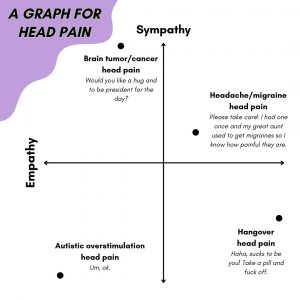
We all deserve the accommodations we need to be our fully realized selves. I’ve been met with the response of “maybe I’m autistic too!” more than not when I’ve disclosed my neurodivergence to people. (Do you think anyone has ever responded to someone confiding in them that they have cancer with “maybe I have cancer too!”?) It’s enlightening when you put these human conditions side by side only to recognize that every single accommodation we permit is based on social viability and visibility. As it has taken me thirty years, thousands of dollars in therapy, extensive research, painful self-reflection and the conquering of imposter syndrome, personally I don’t enjoy this response. However, I do appreciate Devon Price’s words on the topic: “I do think that when allistic people declare that everyone is a little Autistic, it means they are close to making an important breakthrough about how mental disorders are defined; why do we declare some people broken, and others perfectly normal, when they exhibit the exact same traits? Where do we draw the line, and why do we even bother doing so?” [Image 8] Because as no two brains are wired the same, maybe there is no such thing as neurotypical, and in that sense, maybe that other person does have cancer too. As humans live longer with more stress and inadequate healthcare, maybe it’s not such an out of place question to pose.
***
I’ve reflected long and hard enough to confidently claim that cancer saved my autistic soul. I don’t think I could have ever figured out and accepted I was autistic without having gone through cancer. I feel truly conflicting emotions towards this illness that has caused me, my family and friends immense pain, not to mention cost some of them their lives. But that also freed me of a mask I may have lived my whole life having never known I lived, and very well might have died under.
Understanding myself as autistic was a guide through my own labyrinth that I didn’t know I could ever solve. At the very least, cancer allowed me a foundational education about illness and disability to let me process coming to the understanding that I am autistic with kindness and grace towards myself. I’m so fucking autistic from the top of my tumor-ridden head down to my un-socked toes, but no one treated me in accordance with what my brain or body needed until cancer. So here’s what I want: for humans to be valued for their differences and uniqueness before the threat of their absence. Cancer and autism have proven to be life-changing intersectional comorbidities for me, but in a surprisingly positive way.
Image 1
The Holiday, 2006
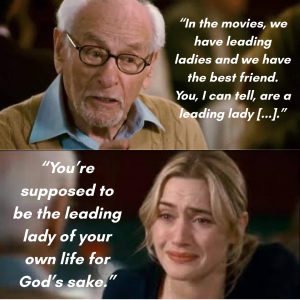
Image 2
Labyrinth, 1986
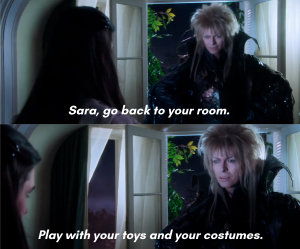
Image 3
David Bowie during an interview on Russell Harty, 1973
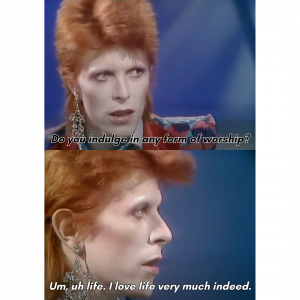
Image 4
Thelma & Louise, 1991
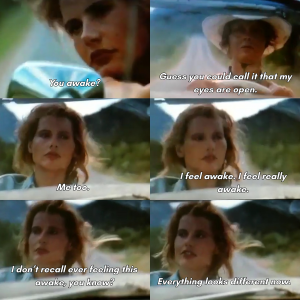
Image 5
Chernobyl, 2019
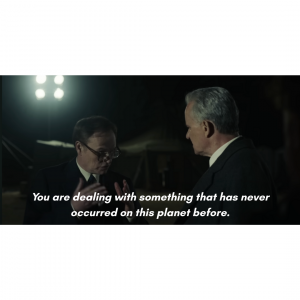
Image 6
Temple Grandin, 2010
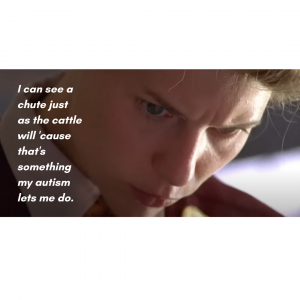
Image 7
The Dark Knight Rises, 2012
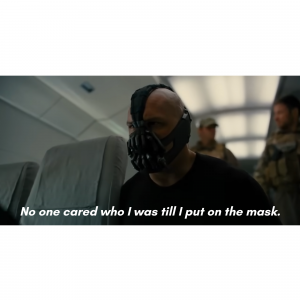
Image 8
Graph by author, 2024

Join the Conversation!
Leave a comment below. Remember to keep it positive!